Nils Schmitt · 2 September 2026
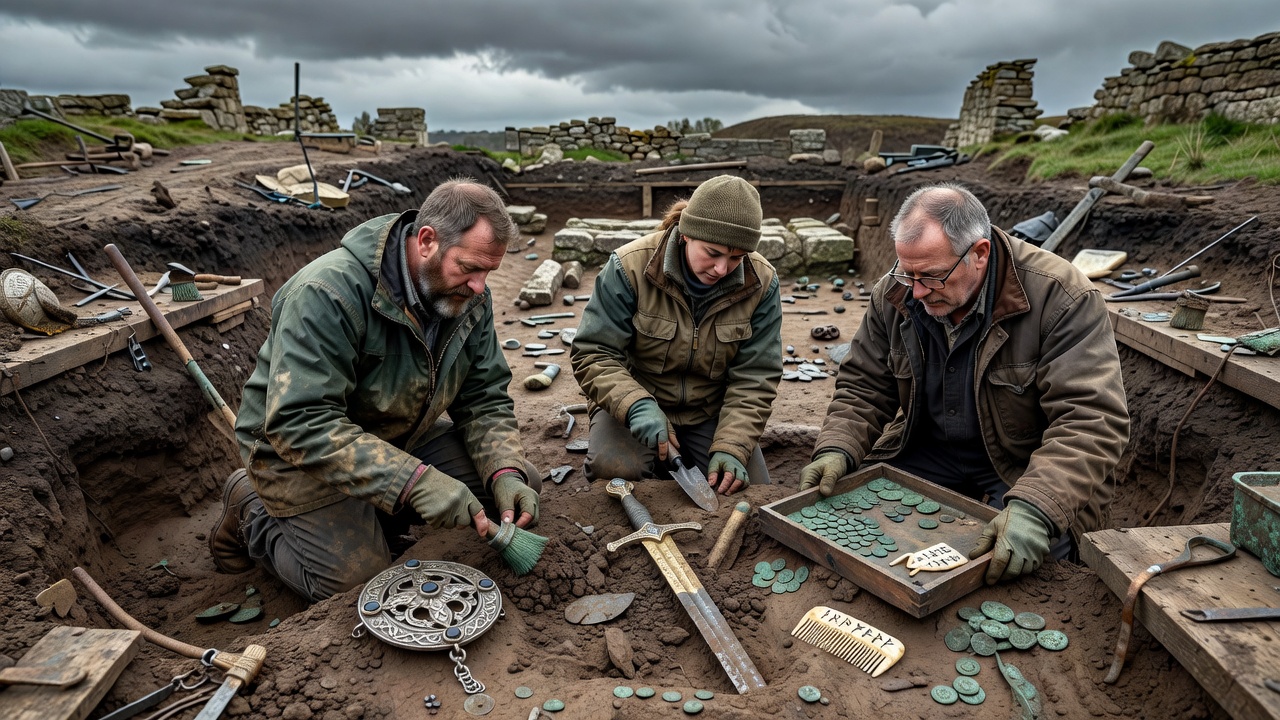
Archaeologists have uncovered a cache of artifacts linked to the seventh-century court of Osric during excavations in northern England. The finds include ornate brooches, iron swords, and ceramic vessels that illuminate daily routines and trade networks of the era. Experts date the items to approximately 650 AD based on stylistic analysis and carbon dating of associated organic remains. The site appears to have served as an administrative center, with evidence of metalworking and food storage facilities.
Key Discoveries at the Site
Among the most notable items is a gold-plated brooch featuring intricate animal motifs typical of Anglo-Saxon craftsmanship. Several spearheads and shield bosses suggest a warrior elite presence at the court. Pottery shards indicate connections to continental European kilns, pointing to active exchange routes. Soil samples reveal traces of wheat and barley, confirming agricultural activity nearby. The team employed ground-penetrating radar to map subsurface structures before full excavation began last spring. Conservation specialists are now stabilizing the metal objects to prevent further corrosion. Preliminary reports highlight the absence of Christian symbols, consistent with pre-conversion practices in the region.
Implications for Osric Era Studies
These relics challenge prior assumptions about the scale of Osric's influence beyond documented battles. Historians note that the quality of metalwork implies access to skilled artisans and imported materials. Comparative studies with finds from neighboring kingdoms may clarify political alliances of the period. Further analysis of bone fragments could yield dietary data and genetic insights into the court population. The project continues with plans for public exhibition once preservation is complete. Funding from academic institutions supports ongoing fieldwork through the next season. Such discoveries contribute measurable evidence to reconstructions of early medieval governance and material culture in Britain.