Jonas Butler · 2 September 2026
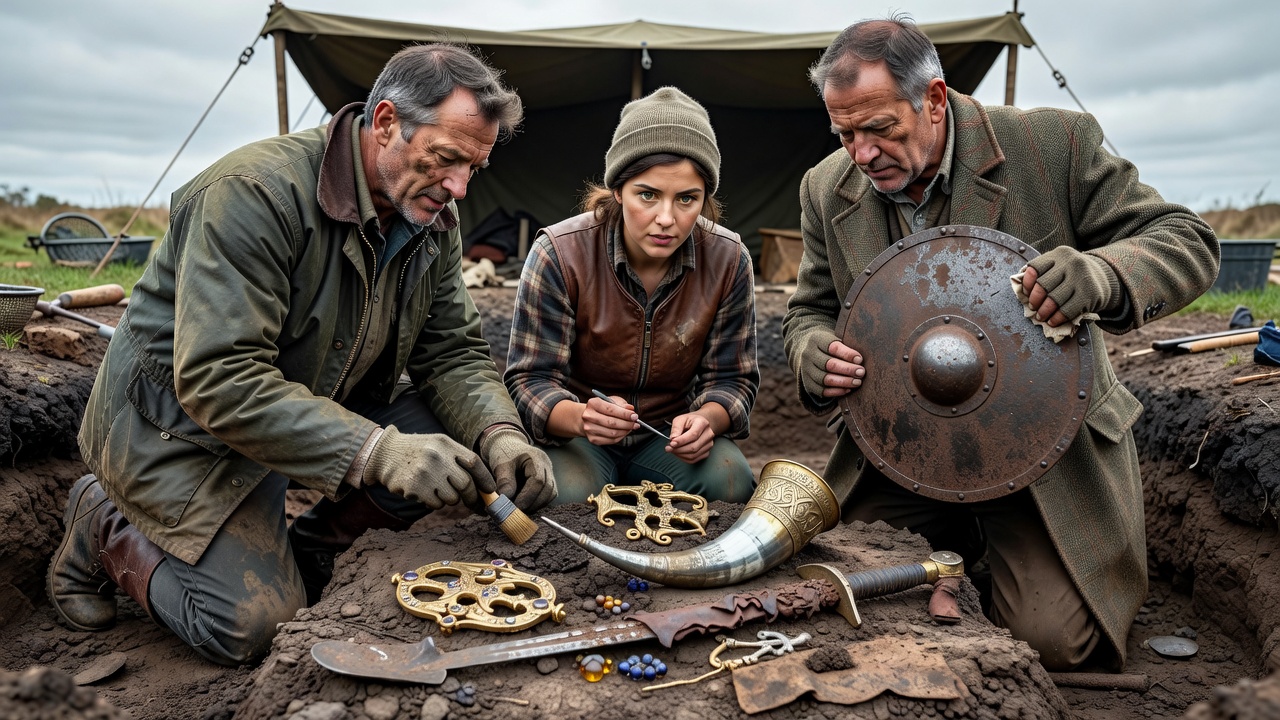
Archaeologists working at a site near the historic borders of early medieval Northumbria have announced the discovery of several well-preserved relics linked to the court of King Osric in the seventh century. The finds include ornate metalwork, inscribed bone fragments, and remnants of ceremonial garments that shed new light on royal practices of the period.
Excavation Details and Methods
The excavation, led by a team from the Regional Archaeological Institute, began in early spring after ground-penetrating radar surveys indicated subsurface anomalies consistent with timber structures. Over six weeks, researchers carefully removed layers of soil that had accumulated since the Anglo-Saxon era. Key artifacts recovered include a gilded brooch featuring interlaced animal motifs, several iron knives with bone handles, and fragments of a leather belt pouch containing small silver coins minted during Osric's reign. Soil samples taken from the site reveal traces of imported dyes, suggesting that court garments incorporated materials traded from continental Europe. The team employed stratigraphic analysis and radiocarbon dating to confirm that the layers correspond to the mid-600s, aligning with historical records of Osric's rule from 633 to 634.
Further examination using portable X-ray fluorescence identified the composition of the metal objects, showing high levels of copper alloy consistent with local smelting techniques. Inscribed bone pieces appear to record short administrative notes, possibly related to land grants or tribute payments. These inscriptions provide rare textual evidence of literacy among court officials during a time when written records were scarce outside monastic centers.
Historical Significance and Future Research
Scholars note that the relics offer direct material evidence of Osric's courtly life, previously known mainly through later chronicles. The ceremonial items suggest a structured hierarchy with specialized artisans serving the royal household. Comparisons with similar finds from neighboring kingdoms indicate that Osric maintained diplomatic and trade connections extending beyond immediate regional boundaries. Conservation efforts are now underway to stabilize the organic materials, which remain fragile after centuries of burial. Plans for a public exhibition are being discussed, pending completion of detailed cataloging and peer review. Additional surveys at nearby locations are expected to continue through the summer, potentially revealing more structures associated with the royal compound. The discoveries underscore the value of combining modern geophysical techniques with traditional excavation to reconstruct early medieval political centers.