Frankie Ludwig · 2 September 2026
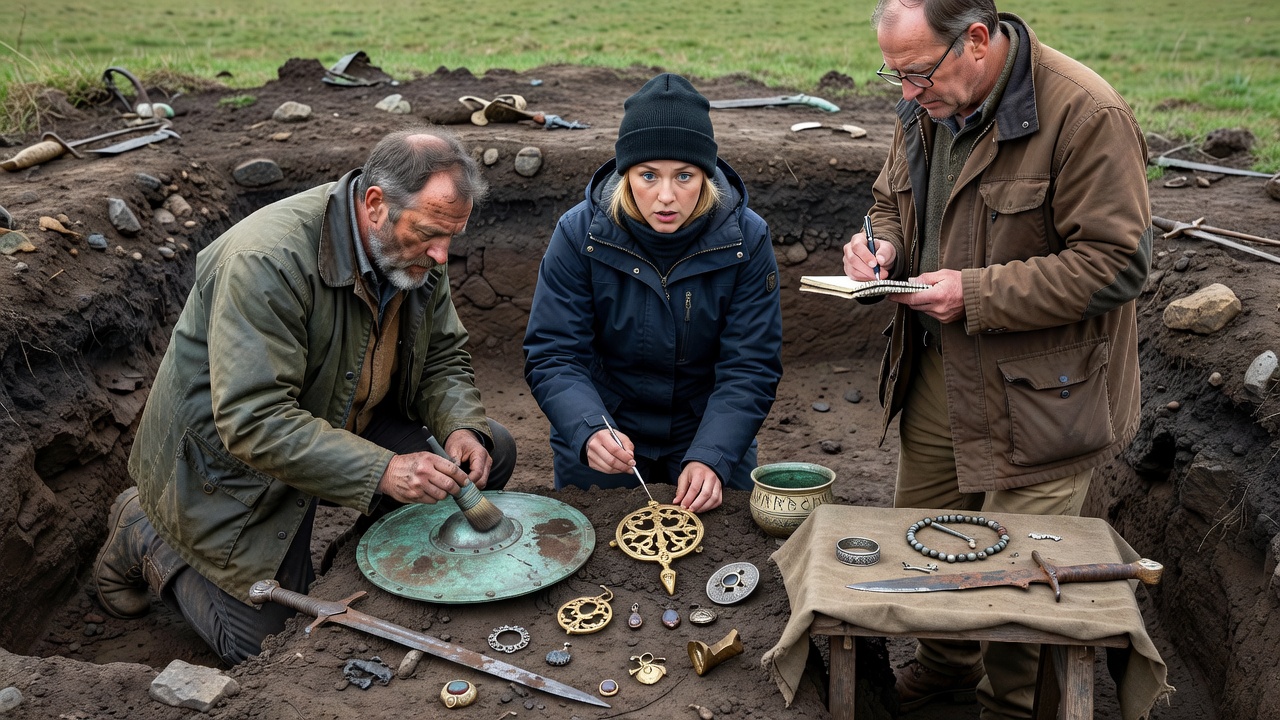
Archaeologists working at a site in northern England have uncovered a cache of relics believed to originate from the court of Osric in the seventh century. The excavation led by Dr. Eleanor Vance has brought to light numerous items that shed new light on the Anglo-Saxon period and daily operations of early medieval courts. Soil samples and stratigraphic analysis place the finds firmly within the mid-600s.
Key Artifacts Recovered
The relics include a gold brooch adorned with intricate garnet inlays several silver coins minted during Osric's reign and fragments of vellum manuscripts showing early insular script. These objects indicate substantial wealth and cultural exchange previously underestimated by historians. Pottery shards iron tools and remnants of wooden furniture were also recovered suggesting a bustling administrative center. Material analysis reveals sources from the Mediterranean and Baltic regions confirming extensive trade networks. Carbon dating and metallurgical tests align precisely with seventh-century chronology.
Additional bone fragments and textile remains offer clues about diet clothing and social hierarchy at the court. The team has catalogued more than two hundred distinct pieces to date with conservation specialists now stabilizing fragile organic materials for long-term study.
Impact on Historical Understanding
Scholars propose these discoveries may revise current interpretations of Osric's political reach and the administrative sophistication of his domain. Evidence points to the court functioning as a hub for diplomacy literacy and craft production. Planned DNA sequencing of faunal remains will further illuminate population movements and resource management during the era.
The project funded by national heritage grants will contribute artifacts to regional museums and support educational programs. Further excavation seasons are scheduled to examine surrounding earthworks and potential burial sites linked to the same period.